How to Build a Customer Feedback Loop for Local Businesses
Learn how to set up an effective customer feedback loop to listen, analyze, and act on customer insights, protecting your brand reputation and driving growth.

How to Build a Customer Feedback Loop That Drives Local Business Growth
Every local business depends heavily on its reputation. Yet, many business owners only hear from customers when a major operational failure occurs. To build a sustainable growth engine, you must establish a continuous, structured system to capture and respond to customer sentiment. Implementing a systematic customer feedback loop is the most reliable way to convert passive buyers into advocates while catching negative experiences before they damage your public standing.
A closed loop ensures that no voice goes unheard. It turns raw customer sentiment into actionable business improvements. Listening, analyzing, and acting on customer input builds deep trust that encourages repeat business.
What Is a Customer Feedback Loop?
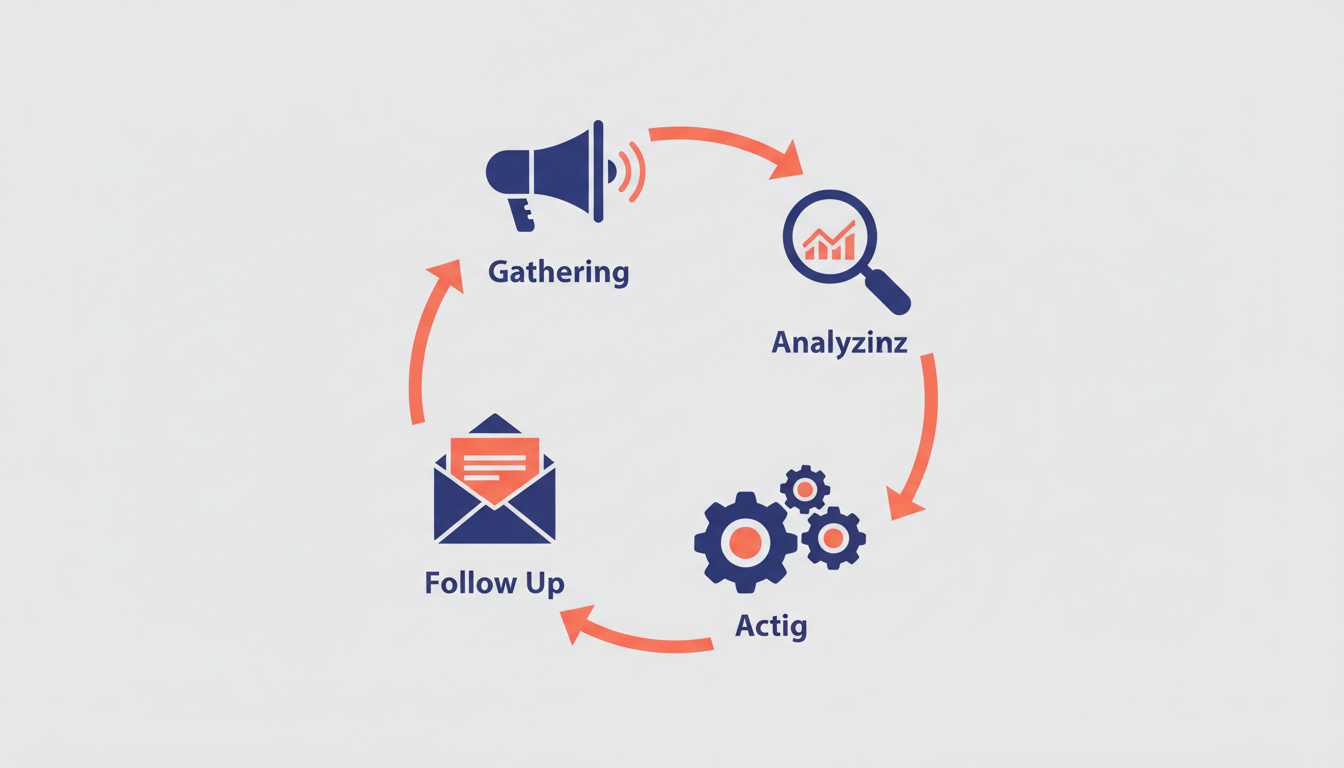
A customer feedback loop is a structured strategy that uses customer experiences to continuously refine a service or operational workflow. This cyclical process involves gathering input, analyzing the data, implementing improvements, and informing the customer of the changes made. The loop is officially closed when you follow up with the customer to show how their input drove real improvement.
Why Is a Closed Feedback Loop Critical for Local Businesses?
For local service providers, retailers, and restaurants, customer experience carries incredibly high stakes. According to BrightLocal's 2024 Local Consumer Review Survey, 98% of consumers read online reviews for local businesses. With such high public visibility, every customer interaction directly impacts your bottom line. An unaddressed feedback channel frustrates customers and wastes valuable operational insights.
In contrast, a closed loop directly addresses concerns before they escalate into negative public reviews. It provides a valuable opportunity to salvage relationships with unhappy buyers. Managing this process internally protects your search engine visibility and public ratings while identifying internal bottlenecks.
From Rviewo's Platform
Businesses that actively ask for feedback tend to see steadily higher public review volume. This observation aligns with research from Podium showing that 77% of consumers are willing to leave a review if a business simply asks them.
The Four Stages of an Effective Customer Feedback Loop
Building a successful feedback system requires a highly disciplined approach. Rather than relying on occasional conversations or surveys, you should establish a continuous four-part cycle across all customer touchpoints.
1. Collect: Gathering Actionable Customer Insights
The first step focuses on gathering high-quality data. To maximize participation, make the collection process as effortless as possible for your customers. Long, complex surveys with dozens of questions usually suffer from very low response rates.
Instead, prioritize short, targeted questions sent immediately after an interaction. Text messages, email surveys, or strategically placed physical QR codes at your checkout counter can capture opinions while the experience remains fresh.
2. Analyze: Finding Trends in the Data
Once you collect feedback, you must organize and interpret the results. Rather than viewing individual comments as isolated incidents, look for systemic patterns.
If a single customer complains about a slow checkout process, it may be an isolated event. However, if ten customers mention the same delay over a weekend, you have identified a clear operational bottleneck. Grouping feedback into categories like customer service, product quality, wait times, and pricing helps highlight these trends.
3. Act: Implementing Operational Changes
Data without action serves no purpose. Once you identify a trend, share the insights with your team and create a concrete action plan. For example, if feedback reveals excessive wait times, you may need to adjust staffing schedules or upgrade your point-of-sale software. Taking action establishes customer satisfaction as a core operational priority rather than a mere marketing slogan.
4. Follow Up: Closing the Loop with Your Customers
Following up is the most critical and frequently overlooked step in the loop. You must reach out directly to the customers who took the time to share their thoughts.
If a customer had a negative experience, contact them to explain how you resolved the issue. For positive feedback, a quick note of thanks showing how their input helped your team builds immense loyalty and proves that their voices truly matter.
Free Tool
How Does Your Reputation Stack Up?
Get a free AI-powered analysis of your Google reviews in 30 seconds.
Run Your Free AuditHow a Customer Feedback Loop Prevents Churn and Drives Revenue
Acquiring new customers is expensive and time-consuming. Retaining your existing customer base is the most cost-effective way to grow. A structured feedback system acts as an early warning mechanism, catching issues before clients decide to switch to a competitor.
According to Bain & Company's Customer Retention Research, increasing retention by just 5% can boost profits by 25% to 95%. Resolving complaints quickly stops churn immediately. Most buyers do not want to switch brands; they simply want their problems acknowledged and resolved.
Consider a dental practice in Phoenix that noticed a sudden drop in patient retention. By implementing a text-based survey immediately after appointments, the clinic identified that patients were consistently frustrated by billing delays. The office manager contacted these patients directly to clarify statements, resolving disputes immediately and preventing negative public reviews. Prompt action saved the patient relationship and secured future appointment revenue.
Additionally, resolving problems quickly can turn an unhappy customer into a vocal advocate. Going out of your way to fix a mistake demonstrates a level of care that few competitors match. Such responsiveness builds deep loyalty that price cuts or marketing campaigns cannot replicate.
Best Practices for Implementing a Customer Feedback Loop
To make your feedback system successful, integrate it naturally into daily operations. The following strategies help ensure your loop remains active and effective:
- Keep surveys short and focused: Ask only for the information you plan to act on. One or two well-crafted questions are far better than a long form.
- Use multi-channel outreach: Meet your customers where they are. Some prefer text messages, while others respond better to emails or in-person prompts.
- Respond within 24 hours: According to the ReviewTrackers Customer Review Survey, more than half of consumers expect a business to respond to their negative review within a week. For private feedback, responding within hours shows a high level of commitment.
- Authorize your frontline staff: Give your employees the authority to resolve customer complaints on the spot. They should not have to wait for managerial approval to offer a refund, a discount, or a replacement.
When collecting reviews publicly, local businesses often struggle to separate high-quality, authentic feedback from spam. Understanding What are Rviewo Reviews? clarifies how verified, geolocation-backed reviews build genuine trust with potential customers. Relying on verified systems ensures your public presence remains clean and trustworthy.
How This Connects to Modern Reputation Management
Modern reputation management is no longer a slow, manual task. Relying on spreadsheets to track customer sentiment is highly inefficient, and successful local businesses now use advanced platforms to monitor, analyze, and respond to feedback instantly.
According to Harvard Business School research, a one-star increase in a business's Yelp rating can lead to a 5% to 9% increase in revenue. Such findings demonstrate that minor improvements in customer sentiment translate directly to real financial gains.
Platforms like Rviewo automate this entire workflow. By deploying QR codes and using the trainable Quilly AI Agent, businesses can capture real-time sentiment, deploy Live CX Surveys, and use Churn Shield to resolve issues before they escalate to public negative reviews. Proactive intervention protects your brand while collecting valuable operational insights on autopilot.
Action Steps to Build Your Feedback System
- Identify key touchpoints: Determine the exact moments in your customer journey where feedback is most valuable, such as immediately after a purchase or post-service.
- Select your communication channels: Choose whether text, email, or physical QR codes are the most effective ways to reach your specific audience.
- Draft clear, simple questions: Focus on Net Promoter Score (NPS) questions or simple satisfaction scales to ensure high response rates.
- Set up internal alerts: Establish a system that immediately alerts management when a customer submits a low rating.
- Review trends monthly: Set aside dedicated time each month to analyze compiled feedback and plan operational updates.
Establishing a reliable system for growth removes the guesswork from understanding customer sentiment. By closing the feedback loop, you protect your online reputation, improve daily operations, and keep your customers coming back. Let automated tools handle the tracking so you can focus on running your business.
Sources
- Local Consumer Review Survey 2024, BrightLocal, 2024
- State of Local Business Reviews, Podium, 2024
- Prescription for Cutting Costs, Bain & Company, 2001
- Online Reviews Survey, ReviewTrackers, 2022
- Reviews, Reputation, and Revenue: The Case of Yelp.com, Harvard Business School, 2011
Related reading
- How to Build a Local Reputation Management Strategy
- How to Create a High-Converting Customer Feedback Form for Local Businesses
- How to Choose the Best Customer Feedback Software to Grow Your Local Business
- Why Your Local Business Needs a Reputation Management Expert
- How to Evaluate Reputation Management Firms: The Ultimate Guide for Local Businesses
Try It Now
See Your Reputation Score
Search any business for an instant AI-powered reputation analysis, free.
For Business Owners
Know what customers really think.
Collect real feedback, manage your Google reputation, and grow with Rviewo's AI platform.
Get Started Free →For Consumers
Find great businesses.
Get rewarded for your feedback.
Discover top-rated local businesses and earn real rewards every time you share your honest experience with them.
Join Free & Earn Rewards →

